Immunoassay Analyzer Troubleshooting | Seamaty | Medical device manufacturers

release time:2021-08-20 16:02:39

In the previous article, Seamaty shared with you three common types of large immunoassay analyzers: fully automated chemiluminescence immunoassay analyzer, fully automated microparticle chemiluminescence immunoassay analyzer and fully automated electrochemiluminescence immunoassay analyzer. There are also maintenance methods for these immunoassay analyzers.


As we all know, these large immunoassay analyzers are complicated to operate and require specialized physician training to operate them. But the machine is inevitably malfunctioning. So if the equipment breaks down in, what can be done?

Chemiluminescent immunoassay analyzers are highly automated and generally have a self-diagnostic function. Once a fault occurs, the instrument can generally automatically detect, display error messages and accompanied by alarm sounds.

Common faults are mainly in the following areas.

1. The pressure gauge of the immunoassay analyzer indicates zero

Vacuum pressure test on the machine, you can hear the sound of the pump work, but the pressure gauge indication is zero.

First check the vacuum pipe connected to the waste liquid bottle, test the vacuum pressure and determine whether the fault is caused by air leakage or damage to the pressure gauge.

Then check the interface of each pipe for air leakage, check the four solenoid valves (in the vacuum pressure test, these four solenoid valves do not work, for the closed state), repair or replace the problematic pipes or solenoid valves in time.

2. Insufficient vacuum pressure of immunoassay analyzer

Vacuum pressure test on the analyzer, if the test result is normal, it is known that the vacuum sensor can not detect the vacuum pressure caused.
The machine's pressure test by two sensors to detect high and low pressure, the problem of the sensor to adjust or clean, and then test the vacuum pressure, the pressure is normal to adjust the sensor screw so that the high and low pressure indication in the specified range.

3. The analyzer luminous body error

a. Check the surface of the instrument luminous body found to have liquid seepage, the fault in three steps to check.
b. Check the waste liquid probe, related piping and cleaning pool for blockage and leakage.
c. Check the sample addition solenoid valve, drainage solenoid valve, solenoid valve, there is dirt will cause poor water intake or drainage.
d. Check whether there are air leaks in the alkali pump cleaning pipeline connected with the waste liquid probe pipeline and whether there are cracks in the alkali pump.

4. Wrong track of the instrument

The fault is caused by the misalignment of the specimen rack in the track and the track can not run. Because the track is very long, and closed not easy to dismantle, generally check the horizontal lift connected to the track first. If normal, then check the track, as long as the misaligned specimen rack is removed, the fault can be eliminated.

Seamaty Veterinary Immunoassay Analyzer SMT-680V
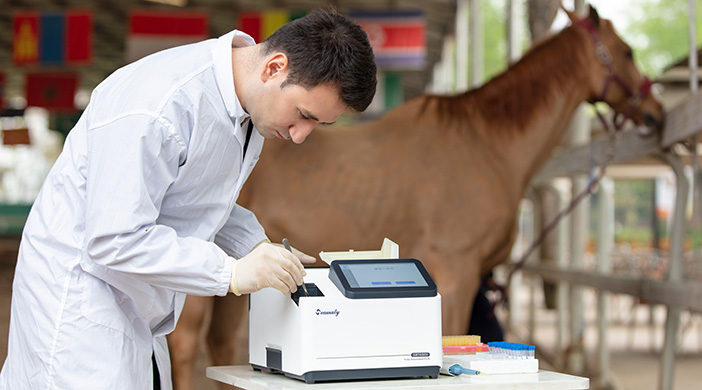
Immunoassay Analyzer SMT-680V

A. Compact and light weight

Veterinary Immunoassay Analyzer  SMT-680V Only 8Kg with small dimensions, space saving and fitting easily into your laboratory.

B. Minimum maintenance
SMT-680V Fluidics-free system for greater reliability, without carry over and less maintenance.

C. Easy to use
SMT-680V takes only several steps to finish the operation, increased efficiency and streamlines workflow.
Prev Return Next

Related Reading

A Glimpse into the Future: POCT Product Trends for 2024

2023-09-08

Explore the 2024 landscape of Point of Care Testing (POCT) with insights on trends shaping healthcare diagnostics. Discover the shift toward specialized clinical departments, tailored product designs, disease-specific testing panels, and the importance of academic promotion. Stay ahead in the evolving world of POCT products.

Chemistry Analyzer Principle | Using | Available Machine

2022-07-25

A chemistry analyzer is a machine used to measure the concentration of various chemicals in a sample. The most common type of analyzer uses enzymatic reactions to measure the concentrations of glucose, protein, and cholesterol.

Animal Blood Testing: Blood Collection Methods | Sample Types

2022-01-13

Animal blood testing includes the collection and processing of blood samples, complete blood counts, ancillary bone marrow examinations, and performing routine coagulation tests.