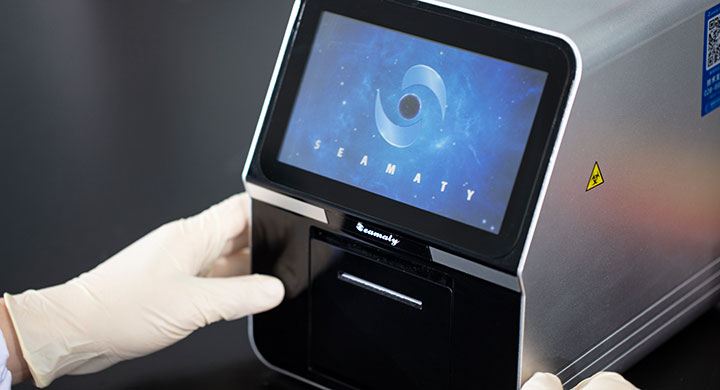
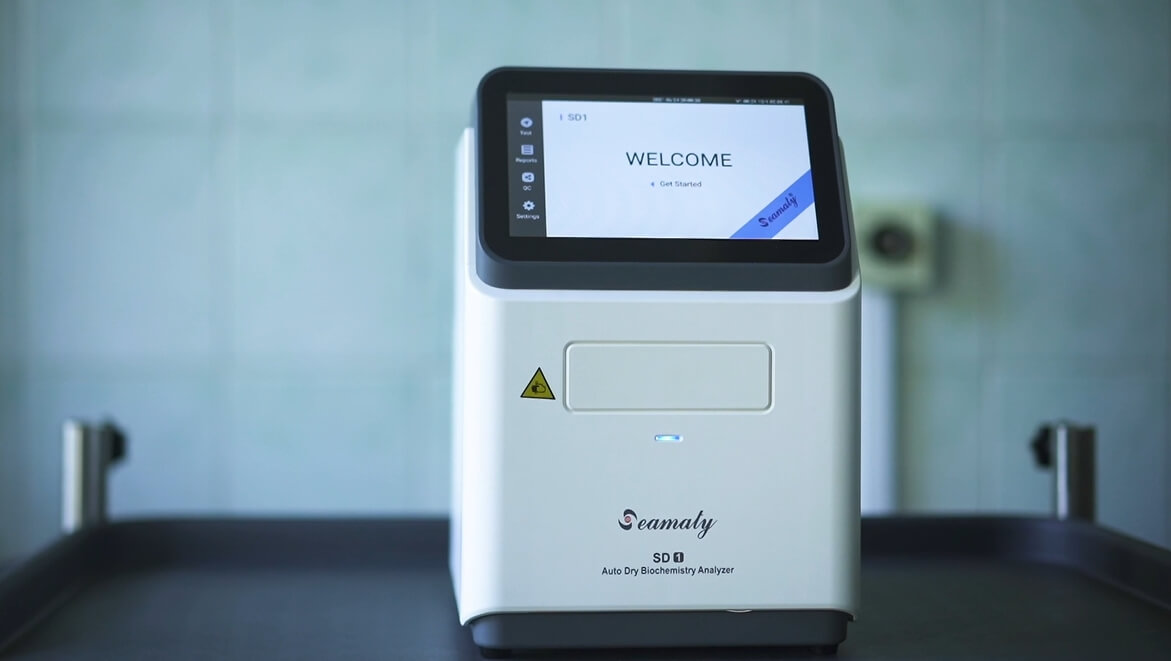
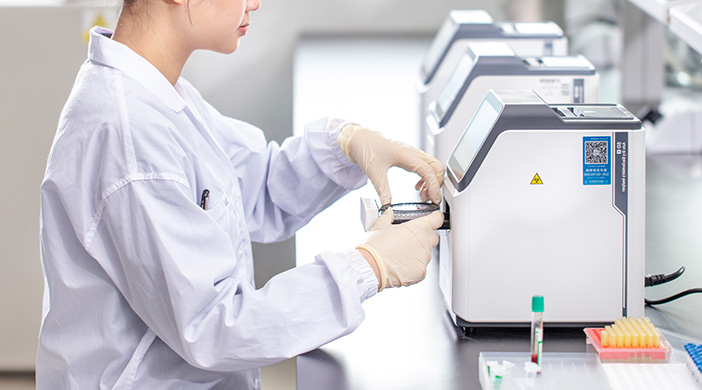
A biochemistry analyzer is also known as a biochemistry machine. It is an instrument that uses the photoelectric colorimetric principle to measure a specific chemical composition in body fluids. Because of its fast measurement speed, high accuracy and small amount of consumed reagents, it is now widely used in hospitals at all levels, greatly improving the efficiency and profitability of routine
biochemical tests.
The emergence and application of high technology such as fluorescence polarization,
chemiluminescence, molecular labeling, biosensing, biochip, etc. have made the instruments and equipment for clinical testing continuously develop in the direction of higher sensitivity, less sample volume, faster analysis and more convenient operation.
Biochemistry analyzer is a class of clinical testing instruments. After continuous updating, from the first generation of spectrophotometer to the second generation of semi-automatic biochemical analyzer, and then to fully automatic biochemical analyzer. A step-by-step breakthrough has been made in the development of this product.
Since Technicon successfully produced the world's first fully automatic biochemical analyzer in 1957, various models and functions of different fully automatic biochemical analyzers have been emerging. This is a very important step towards the automation of clinical biochemical tests in hospitals.
Nowadays, the amount of information about organisms is increasing with the continuous research in medicine, physiology, biochemistry and other disciplines. This has greatly contributed to the demand for testing items in biological samples by clinicians. The biological samples contain very small amounts of substances such as hormones that are important for the diagnosis of clinical diseases. This has created a huge impetus for the development of fast and sensitive test instruments.
On the other hand, new test techniques, such as enzymatic rate method analysis techniques in biochemical tests, dry chemical test strip method detection in clinical tests, radioimmunoassay, enzyme immunoassay and
chemiluminescence techniques in immunoassays, fully automated identification techniques in microbiological tests, and new techniques in molecular biology represented by polymerase chain reaction. These technologies make the sensitivity of the test methods continue to improve, the specificity is getting better, and the test results are more accurate and reliable.
The biochemical analyzer is used as an instrument to detect and analyze vital chemical substances. With its high technical content, accuracy, precision, flexibility and efficiency advantages, the fully automatic biochemical analyzer has now become one of the essential equipment in modern clinical testing departments. Biochemical machines are responsible for an increasingly heavy workload of testing.
It can give clinical diagnosis, treatment and prognosis of diseases and health status to provide information basis. Biochemical analyzers are an important thrust in the development of the medical testing field and will be more widely used.