Automatic biochemistry analyzer maintenance tips | Seamaty

release time:2021-09-15 11:24:19

In a previous article, we talked about how to maintain chemiluminescent immunoassay analyzers. Now we discuss what are the tips for routine maintenance of fully automated biochemistry analyzers? The daily maintenance of medical equipment is related to the normal operation of the instrument and the accuracy of the test results.

When the automatic biochemistry analyzer is not used for a long time, the pump tube should be taken off the pump wheel. To extend the life of the colorimetric cell and reduce cross-contamination. At the end of each day's work, the colorimetric cell and liquid path should be flushed.

It can be cleaned with sodium chlorate cleaning solution first, and then rinsed with distilled water. Note that when cleaning with distilled water, loosen the suction switch and remove the tube action to match well. Not only to make the distilled water in the suction tube empty part, but also to keep the colorimetric pool is still full of distilled water. If the biochemical analyzer is not used for a long time, the liquid path should be completely emptied.

Long-term frequent operation of the automatic biochemical analyzer, the instrument parts are likely or wear and tear, the existence of potential failure. Such as filters, filters after a period of use, its transmittance will decline. When the transmittance decreases to the extent that the biochemistry analyzer can not work properly, or the instrument's light source lamp failure. The analyzer will also automatically give an indication. At this point, the upper cover of the instrument can be opened and inspected.

If it is determined that the light bulb is damaged, it should be replaced with the same type of tungsten halogen bulb; if it is a power failure, it should be repaired by a professional.

Another example is the pump tube. Pump tube after a period of use, due to prolonged extrusion, will cause deformation or even rupture of liquid leakage. If it has been significantly deformed, it will lead to the inaccuracy of the amount of liquid absorption.

In addition, the fuse tube is also prone to failure. When the fuse is burnt out, make sure to cut off the power before replacing the fuse with the same specification. Or replace it under the guidance of a professional.


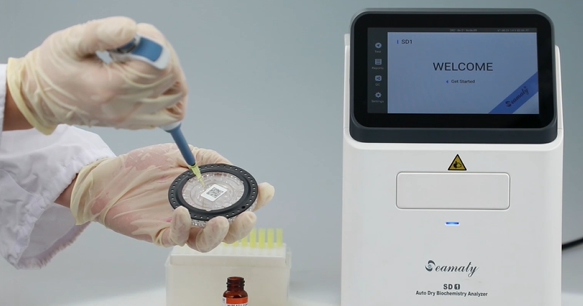
Only with good maintenance can medical equipment be used for a longer period of time.  The Seamaty portable POCT Biochemistry Analyzer is easy to operate. For example, the SD1 Biochemistry Analyzer requires no sample pre-treatment and no diluent addition. It is a 3-step operation: add sample, release sample, and read results. This allows physicians to stop worrying about the complex operation of the instrument.
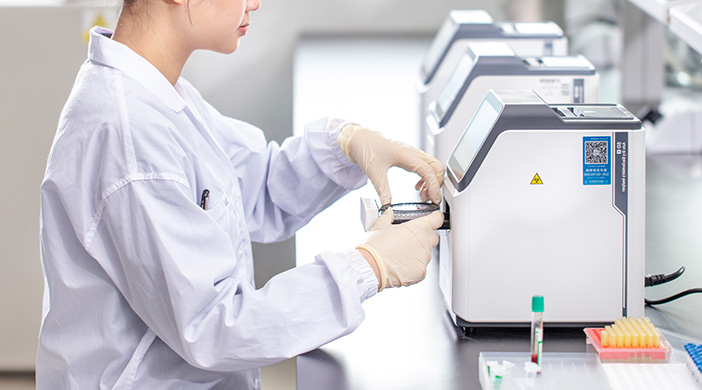
SD1 Chemistry Analyzer

In addition, the SD1 biochemistry analyzer has online troubleshooting and network upgrade reminder functions to help doctors grasp the operation of the instrument in real time. The portable biochemistry analyzer weighs about 5 kg, and it has no liquid circuit, pump valve and other wearing parts, so it is free of cleaning and maintenance.

Prev Return Next

Related Reading

Is a Veterinary Biochemistry Analyzer Expensive? How Can It Enhance Pet Healthcare in Animal Hospitals?

2025-01-16

Discover how veterinary biochemistry analyzers, like the Seamaty 120VP, enhance pet healthcare with accurate diagnostics, personalized treatments, and real-time monitoring. Learn about costs, features, and applications that improve animal hospital efficiency and service quality while reducing operational expenses.

Structural comparison of dry and wet biochemistry analyzers | Seamaty

2021-09-09

There are several chemical analysis techniques in biochemistry analyzers, including colorimetric reaction, ISE (ion selective electrode), immunoturbidimetry, etc. The way and container of colorimetric reaction is the main difference between dry and wet biochemistry analyzer.

How does a biochemistry analyzer test for blood lipids | Medical Diagnosis

2021-09-02

Biochemistry is able to test total cholesterol (CHO), triglyceride (TG), high-density lipoprotein cholesterol (HDL-C), low-density lipoprotein cholesterol (LDL-C) and other items related to blood lipids. The biochemistry analyzer enables an all-round understanding of blood lipid levels with accuracy and credibility.