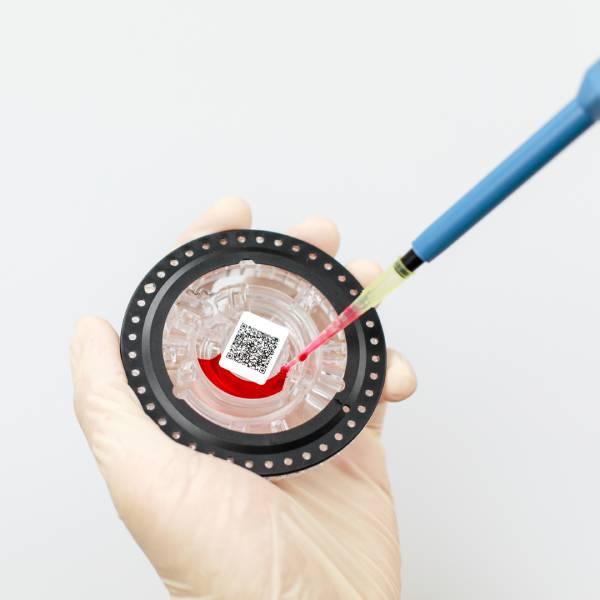
Blood glucose control is the key to the treatment of diabetes, and the POCT blood glucose meter is a commonly used instrument for measuring blood glucose in diabetic patients. It can accurately and quickly determine the blood glucose concentration of patients and provide timely guidance for clinicians in the use of medication. However, in the clinical examination, the measurement results of portable blood glucose meter often do not match with the laboratory results.
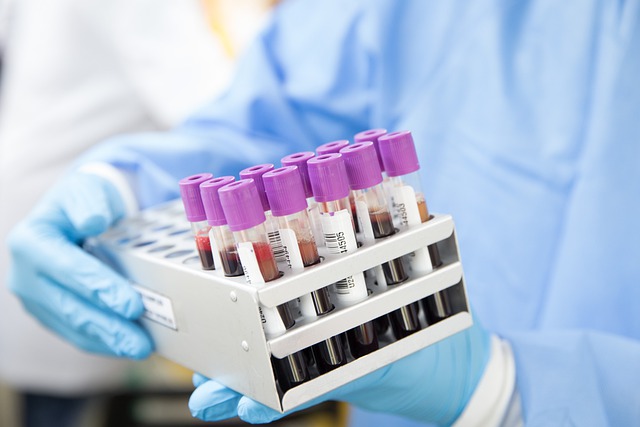
The home blood glucose meter detects whole blood in the fingertip capillaries. The biochemical analyzer detects blood glucose by drawing venous blood to check. Then the biochemical analysis centrifuges the blood. This separates out cellular components such as red blood cells. Finally, the blood glucose value of the plasma is then tested. Therefore, there will be some difference between the blood glucose value detected by blood glucose meter and the blood glucose value detected by venous blood drawing. Also this difference is related to a variety of factors such as the amount of food eaten, the variety of food, and the time of eating.
First, the blood glucose values must be tested at the same time in order to be comparable. Because our blood glucose fluctuates with the time of eating and the amount of activity. So the blood glucose detected at different times must be different.
Secondly. The blood glucose detected by intravenous blood glucose and blood glucose meter allow some error. In addition to the reasons mentioned above, we should know that no matter what instrument is used for testing, it is the same specimen, and there may be a certain error when testing twice. Of course, the error should not be too big. It is generally believed that the error of blood glucose meter within 15% will not affect the adjustment of treatment measures. This situation is acceptable. We don't need to be concerned about the small difference between the blood glucose detected by blood glucose meter and biochemistry analyzer. What is important is to see whether there is a great change in the measured value before and after using the same blood glucose meter.
Thirdly, we should pay attention to whether we operate correctly when testing blood glucose with the blood glucose meter. For example, the timing is inaccurate, the blood drop is too small, the instrument is contaminated, the squeezing finger is too hard to make the tissue fluid dilute the blood, the test paper is not stored properly and so on. All these can lead to inaccurate test results.
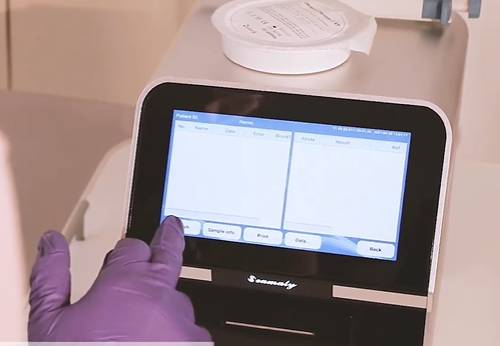
Seamaty fully automatic biochemistry analyzer has been widely used in more than 80 countries around the world because of its small consumption of reagents, fast measurement speed and high accuracy of results.
Although POCT blood glucose meter has many advantages such as easy, fast, and not restricted by the place. However, there are many influencing factors in its measurement. Moreover, there are differences between different manufacturers and different models of blood glucose meters in the test results, which bring influence to the diagnosis and treatment. It is also susceptible to interference by external factors (such as instrument performance, ambient temperature, humidity, blood sampling methods, etc.). The principles used by different models of instruments are not the same. In addition, the blood glucose meter is also limited by the measurement range, and too high or too low values cannot be accurately displayed.
Therefore, clinical quality control and management of POCT blood glucose meter is only suitable for diabetes treatment monitoring, and cannot replace the glucose test in laboratory. Therefore, when POCT blood glucose meter is applied to determine blood glucose value, it should be compared with the measured value of laboratory biochemical analyzer regularly to improve the accuracy of POCT blood glucose meter detection. Patients should not rely too much on the measurement results of the rapid glucose meter during the process of therapeutic observation, and should go to the hospital for review regularly.