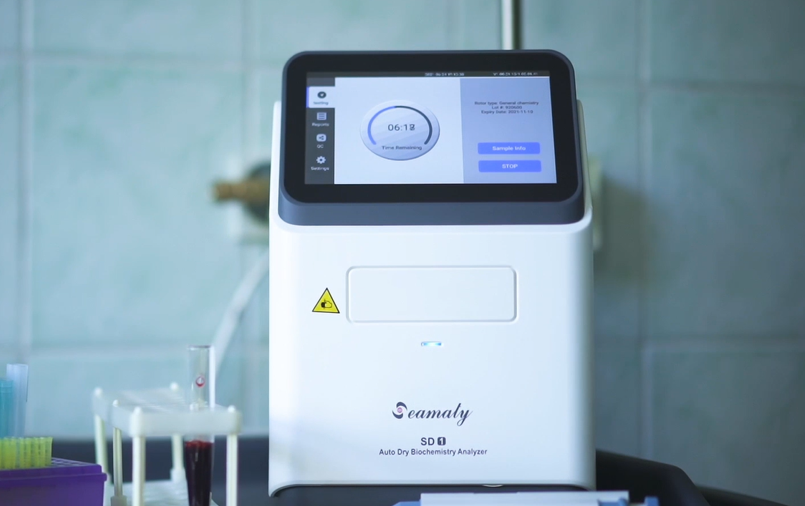
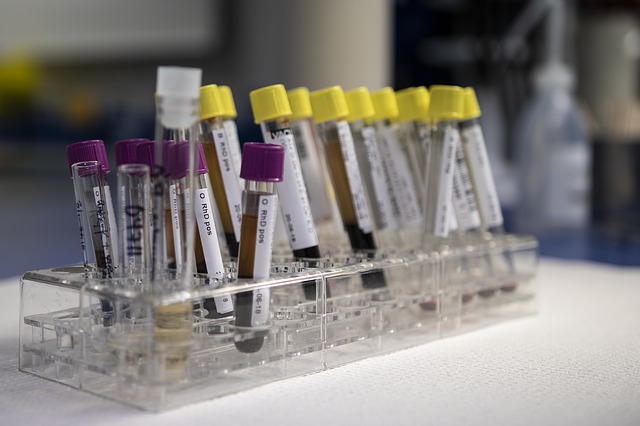
Biochemistry lab instruments have many instruments and equipment, the main equipment Spectrophotometer, ELISA Reader, Electrophoresis, Auto analyzer, Immunoassay auto analyzer, Flame Photo Meter, ABG analyzer,Semi-Autoanalyser, Electrolyte analyzer, ISE Electrolyte analyzer, HPLC,Nephelometer, etc.
This article mainly introduces the biochemical analyzer related content.
1. What is biochemical analysis?
Fully automated biochemical analyzer is the most commonly used large equipment in hospital laboratory. Its main working principle is to automatically complete the process of sample addition, dilution, mixing, reaction, colorimetry, monitoring of the analysis process, data recording, calculation, printing and finally get the biochemical analysis laboratory report form through automation, optical and other technologies.
It can also be said that the biochemical analyzer is actually a fully automated spectrophotometer. Ultimately are through the colorimetric method, and then use the principle of Beer's law: A = KCL (A is the absorbance, K is the absorbance coefficient, L is the thickness of the solution layer called the optical diameter, C is the solubility to be measured), to get the solubility of our substances to be measured. It is also the content of our substance to be measured.
2. What exactly is the biochemical analysis of the substances to be measured in the human body?
People who have not done biochemical testing may not be very clear about this area of biochemistry. That biochemical analysis in the end is the analysis of what things. As the name implies, biochemical analysis is called biochemical analysis. It is the analysis of biochemical substances, that is, the biochemical substances in our body.
What are the biochemical substances in the human body? In simple terms, it is the chemical substances or human metabolites with certain biological activity generated by the cells in the human body (organism). In addition to water and inorganic salts, the human body is composed of three types of organic substances: proteins, lipids and sugars. In fact, in addition to these three categories, there are also nucleic acids and a variety of biologically active small molecule compounds, such as vitamins, hormones, amino acids and their derivatives, peptides, nucleotides, etc.
3. Why do we need biochemical tests?
Biochemical tests have a very important clinical significance. The reason is that changes in the level of some biochemical substances in the body, i.e., higher or lower than normal values. Simply put, in the clinician's opinion, such changes point to some kind of disease in the body or a certain type of disease.
For example, the normal reference value for alanine aminotransferase ALT is 5-40 U/L for men and 5-35 U/L for women.
When ALT activity is elevated, it is seen in: hepatobiliary diseases (infectious hepatitis, toxic hepatitis, liver cancer, active cirrhosis, etc.), cardiovascular diseases, other diseases, etc.
Check the information basically can know the main items of biochemical analysis. For example, liver function series: albumin, total protein, total bilirubin, direct bilirubin, glutamate, glutamic acid, alkaline phosphatase, bile acid, cholinesterase, adenosine deaminase, prealbumin, alglucosidase, etc.; and then lipid series: cholesterol, triglyceride, high-density lipoprotein, low-density lipoprotein, apolipoprotein A, apolipoprotein B, lipoprotein a, etc.. Here we won't talk about them one by one.
4. Biochemical machine brands and reagent brands
Nowadays, the main brands of
biochemical instruments are Roche, Beckman, Abbott, Siemens, Toshiba, Hitachi, Mindray, KHB, Dirui, etc.
The above is the introduction of biochemistry lab instruments of biochemical analyzer.